The short version
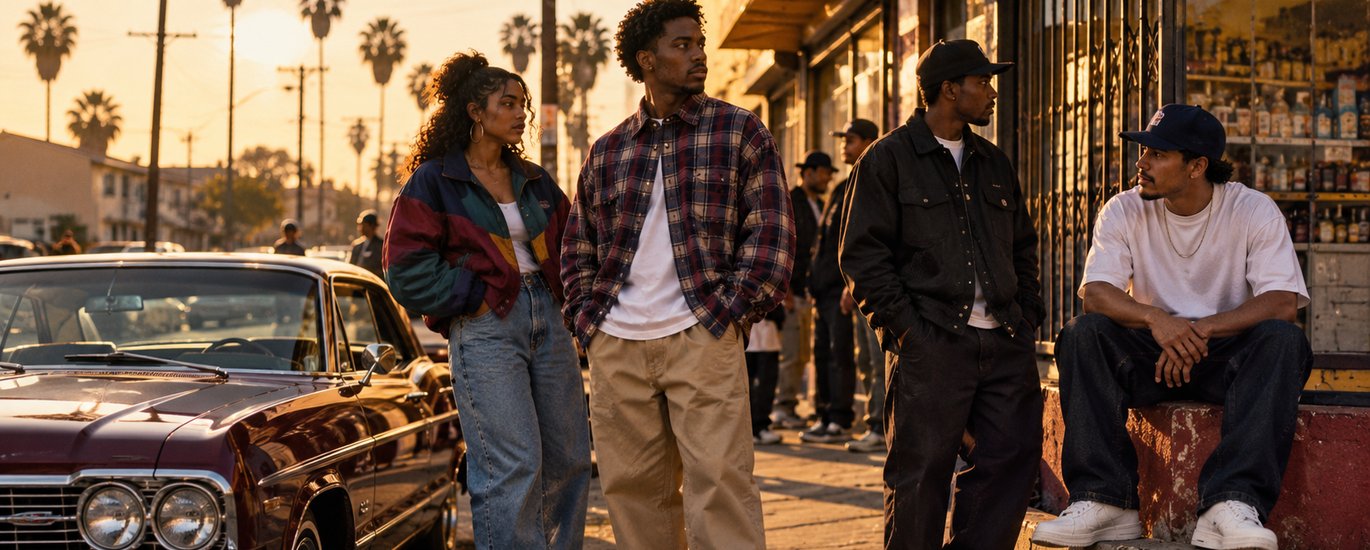
The Drop: A Snowfall Saga is a love letter to early ’90s West Coast style, a look the streets built out of workwear, team gear and whatever was on the rack, long before anyone sold it back as a brand. Creased Dickies, Pendletons buttoned at the top, crisp white tees, Cortez and Chucks. Then hip hop opened a lane, and young Black entrepreneurs like the founders of Cross Colours and Karl Kani turned that way of dressing into labels they owned. The clothes weren’t new. The ownership was.
- Spoiler-light: this article talks about the look and the era, not the plot.
If you were there, you already know
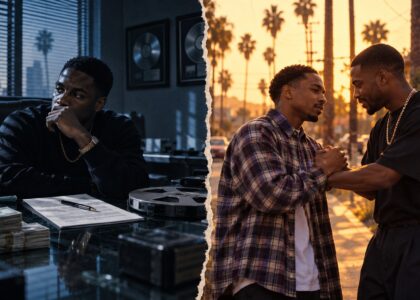
Watch the first episode of The Drop and something hits before the story does. It’s the fit. The khakis are pressed hard enough to stand up on their own. The flannel is buttoned to the neck with nothing under it but a white tee. The sneakers look like they were cleaned with a toothbrush that morning, because back then they were.
If you grew up in Los Angeles in the early ’90s, or had a cousin who did, none of it looks like a costume. It looks like the corner store, the bus stop, the backyard party. That’s the point. The show doesn’t dress the ’90s. It remembers them.
How The Drop dresses 1990s Los Angeles
ON SCREEN
The Drop’s wardrobe was built from authentic early-’90s streetwear, not modern reproductions. Costume designer Mynka Draper’s team drew on films of the era and on music videos from N.W.A and WC, and sourced vintage pieces from specialty retailers. Cross Colours, Karl Kani and FUBU, three of the defining Black-owned labels of the decade, also contributed clothing to the show.
- Wardrobe as character: DG dresses like a man who needs you to know he made it. The clothes are a statement of power before he says a word.
- The details fans caught: viewers tracking the wardrobe have spotted Nike Cortez, Carhartt jackets and a Champion Dodgers sweatshirt on Leon in the first episode.
- Why it matters: the show’s music team has said the ’90s don’t feel like the ’80s. People talked, walked and dressed differently, and the wardrobe makes that difference visible.
Before the brands: rocking what was available
THE ORIGIN
Early West Coast street style wasn’t designed in a studio. It was put together from workwear, sportswear and the discount rack, then worn with so much intention that it became a uniform. Nobody was waiting on a drop. You bought what was durable, affordable and close by, and made it yours through how you wore it: the crease, the size, the button, the color.
| The piece | What it was made for | How the West Coast wore it |
|---|---|---|
| Dickies 874 work pants | Work pants from a Texas company founded in 1922 | Sized up, creased sharp, sitting low, often in navy, black or khaki |
| Ben Davis | San Francisco workwear, since 1935 | Heavy work shirts and pants worn as everyday street clothes |
| Pendleton flannel | Wool shirts from an Oregon mill dating to 1863 | Buttoned at the top only, worn open over a white tee |
| Plain white tee | Undershirt | Oversized, bright white, worn as the main event |
| Nike Cortez | A running shoe from 1972 | Kept spotless and worn with everything |
| Converse Chuck Taylor | A basketball sneaker | Low-key, cheap and clean, a staple from Compton to the Eastside |
| Raiders, Kings and Dodgers gear | Team merchandise | Hometown pride, black-and-silver attitude, and a statement of where you’re from |
The neighborhood in the clothes
REALISM
Gang culture shaped West Coast style more than any designer did, and pretending otherwise misses the story. In Los Angeles in the late ’80s and early ’90s, colors and neighborhoods carried weight. Blue and red meant something. The way you wore a hat, what team you repped, even the color of your laces could say where you were from. That was real, and for a lot of young people it came with real danger.
The style also crossed lines. Black and Chicano neighborhoods sat side by side, and the looks fed each other. The pressed Dickies, the Pendleton buttoned at the top, the Locs sunglasses and the creased white tee came out of a shared street culture that was distinctly Los Angeles. Lowrider culture brought its own swagger. None of this came from a mall. It came from the block.
The lingo and the flavor
The look came with a language. Long before it showed up in every rap verse in the country, it was just how people talked on the West Coast.
| Word or phrase | What it means | The flavor |
|---|---|---|
| Homie | A close friend, someone from your circle | Loyalty, the core of the whole culture |
| Cuz | A friend or associate, strongly tied to Crip neighborhoods | Where you’re from mattered in how you talked |
| Loc | Short for loco, someone down for their people | Respect with an edge |
| O.G. | Original gangster, an elder of the neighborhood | The ones who came before and set the rules |
| It’s all good | Everything’s fine, no problem | That laid-back West Coast calm |
| What’s crackin’ | What’s going on, what’s happening | The everyday greeting |
Hip hop opened the lane: from wearing brands to owning them
OWNERSHIP
Hip hop gave young Black entrepreneurs a direct line to the culture, and they built brands around the way the streets already dressed. They didn’t invent oversized denim, baggy fits or bold color. The streets had already done that with Dickies and team gear. What they did was claim it, design it on purpose, and own the label.
- Cross Colours (Los Angeles, 1989): founded by Carl Jones and T.J. Walker under the motto “Clothing Without Prejudice,” with bold primary colors and oversized cuts that put LA streetwear on national TV.
- Karl Kani: a Brooklyn designer who built his label in Los Angeles in the early ’90s, known for baggy jeans and a name stitched right on the waistband. Tupac wore it and appeared in its ads.
- FUBU (Queens, 1992): an East Coast label whose name said it plainly: “For Us, By Us.” It proved the movement was national.
The power wasn’t in the fabric. It was in the name on the tag. For decades, the culture had made other brands cool for free. Now the profit, the credit and the direction stayed with the people who created the look.
Then and now: what the early ’90s set in motion
| Then | What it meant | What it became |
|---|---|---|
| Wearing workwear brands your own way | Style without permission | Streetwear as a global category |
| Team gear as neighborhood identity | Where you’re from, worn out loud | Fan merch as fashion |
| Cross Colours, Karl Kani, FUBU | Black ownership of urban fashion | A path for independent labels everywhere |
| Lingo spreading through West Coast rap | Local language, national reach | Words now used worldwide |
| Clothes with a message | Pride and positivity | Culture apparel |
How to wear the early ’90s West Coast look today
STYLE GUIDE
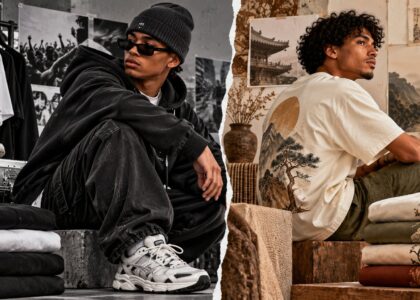
The easiest way to bring the early ’90s West Coast look into today is one strong graphic tee, clean workwear and spotless sneakers. Keep it intentional, not costume.
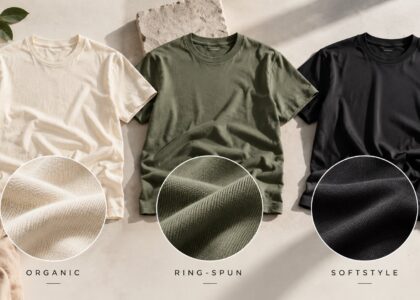
- The base: a crisp tee, such as the Resistance The Movement Tee in 100% organic cotton, sized up one for that relaxed drape.
- The layer: a flannel buttoned only at the top, or a work jacket.
- The bottoms: creased work pants or relaxed dark denim.
- The shoes: clean Cortez or Chucks. Clean is non-negotiable.
- The message: the Stolen Wealth Tee speaks directly to the ownership story: who holds the money and who builds the wealth.
| If you want… | Wear | Pair with |
|---|---|---|
| Movement-era energy with ’90s attitude | Resistance The Movement Tee, $23 | Pendleton-style flannel, dark work pants |
| The ownership message | Stolen Wealth Tee, $25.50 | Black denim, clean white sneakers |
| Loud pride, Cross Colours spirit | Intoxicated Off Melanin Tee, $25.50 | Relaxed khakis, a fitted cap |
| West Coast sound, worn | High Frequency Tee, $24 | Work jacket, Cortez |
-
 Intoxicated Off Melanin Tee – Black Pride Graphic T-ShirtPrice range: $25.50 through $30.00Compare
-
 High Frequency Tee – Lightning Bolt Streetwear T-ShirtPrice range: $24.00 through $27.00Compare
-
 Resistance The Movement Tee – Civil Rights Graphic T-ShirtPrice range: $23.00 through $45.00Compare
-
 Stolen Wealth Tee – Black Wealth Graphic T-ShirtPrice range: $25.50 through $30.00Compare
Where Infinite Life Lived fits in
THE LINEAGE
Infinite Life Lived comes from the same idea the early ’90s proved: the culture should own the culture. The designs carry history, music and community knowledge, worn the way the streets have always worn things, on their own terms. Every piece is printed to order, made for people who know where the look came from.
- Keep reading: what The Drop teaches about loyalty in The Drop: A Snowfall Saga and the Price of Integrity.
- Local: urban wear in Los Angeles, the city that wrote the West Coast style book.
Frequently asked questions
What was early ’90s West Coast streetwear?
Early ’90s West Coast streetwear was a Los Angeles look built from workwear and sportswear: creased Dickies, Pendleton flannels buttoned at the top, oversized white tees, Nike Cortez, Converse Chucks and Raiders, Kings and Dodgers gear, worn with sharp intention.
Who did the costumes for The Drop: A Snowfall Saga?
Mynka Draper designed the costumes. Her team used authentic early ’90s streetwear from vintage specialty retailers, referenced N.W.A and WC music videos, and included pieces from Cross Colours, Karl Kani and FUBU.
How did gang culture influence West Coast fashion?
Neighborhood identity in Los Angeles shaped how people dressed, from color choices to team gear to how pants and flannels were worn. Black and Chicano street styles influenced each other, creating a look that became distinctly West Coast.
What clothing brands were popular in early ’90s Los Angeles?
Dickies, Ben Davis, Pendleton, Nike Cortez, Converse, Locs sunglasses and sports team gear were everyday staples, while Cross Colours and Karl Kani led a new wave of Black-owned urban fashion labels.
Was Cross Colours a Black-owned brand?
Yes. Cross Colours was founded in Los Angeles in 1989 by Carl Jones and T.J. Walker, with the motto “Clothing Without Prejudice.”
How do you dress in early ’90s West Coast style today?
Start with a crisp oversized graphic tee, add a flannel buttoned at the top or a work jacket, wear creased work pants or relaxed dark denim, and finish with clean Cortez or Chucks.
How do I contact Infinite Life Lived customer support?
Email info@infinitelifelived.com for help with orders, sizing, shipping or returns. Include your order number if you have one.